Air-sealing & weatherization
Air-sealing and weatherization help stop the small leaks that let heated or cooled air escape from your home. It is often done before adding insulation, because insulation works better when air is not moving through gaps and cracks.
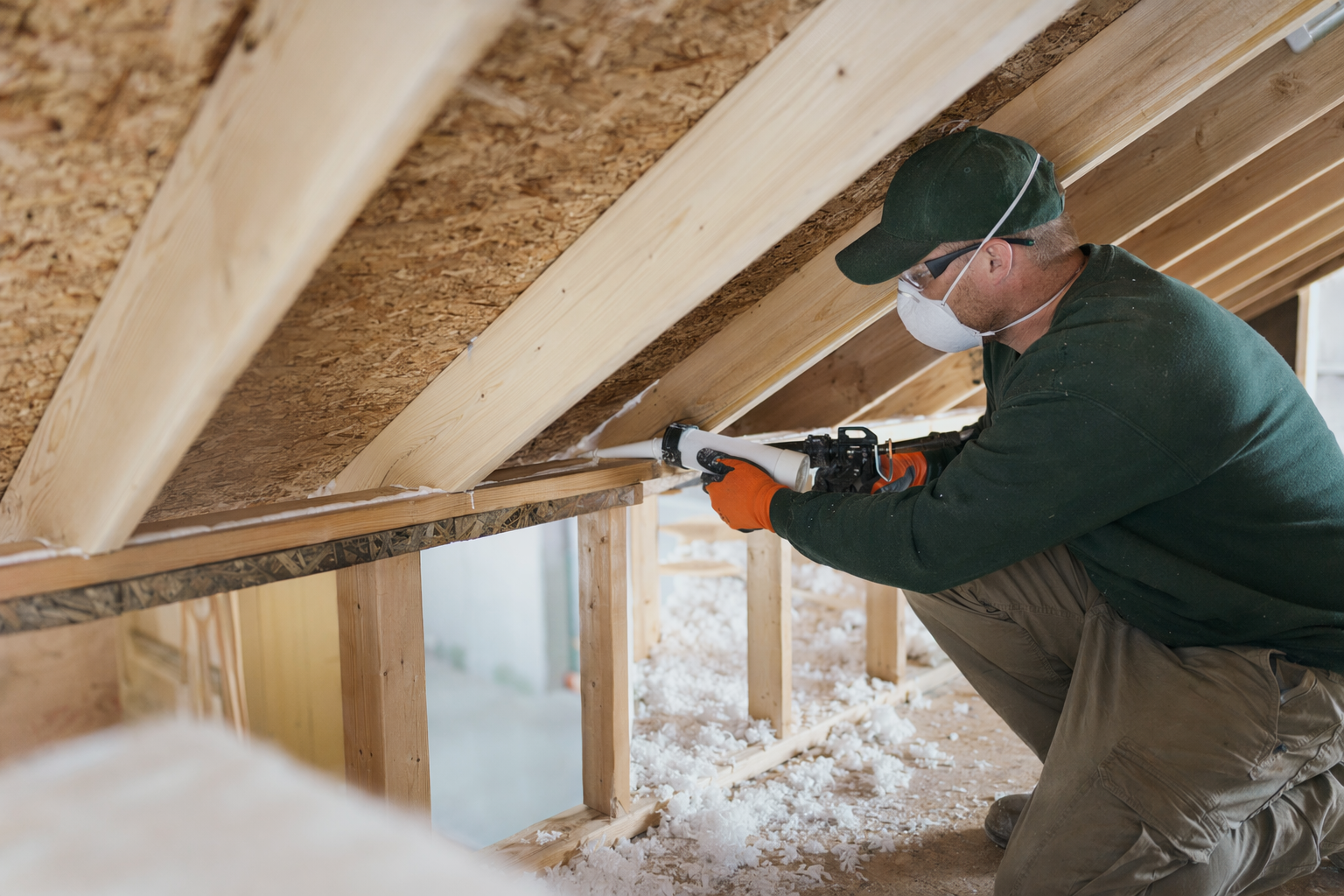
What air-sealing & weatherization are
Air-sealing means closing the hidden gaps where air leaks in and out of the house. Common leak areas include the attic floor, plumbing and wiring openings, recessed lights, top plates, hatch covers, duct penetrations, and rim joists in a basement or crawlspace.
Weatherization is a broader term. It can include air-sealing, adding or improving insulation, and sometimes other efficiency upgrades that help the home hold indoor temperatures more steadily.
This work is a good fit when rooms feel drafty, floors are cold, upstairs gets too hot or too cold, or energy bills seem higher than expected. It is also common before attic insulation, crawlspace insulation, or wall insulation. If you are comparing project types, see costs or air-sealing services.
How the job usually works
Most projects follow a simple order.
1. Assessment: A licensed and insured insulation installer looks at the spaces being treated, notes likely leakage points, and discusses problem rooms, comfort issues, and access.
2. Prep: The crew protects work areas and clears access to the attic, basement, crawlspace, or other target areas.
3. Air-sealing: Gaps and penetrations are sealed with materials chosen for the location and size of the opening. Larger holes may need more than one product. Rim joists, attic bypasses, and hatch edges are common targets.
4. Insulation work, if included: After leaks are sealed, insulation may be added or improved so the space reaches the planned thermal level.
5. Final check: The installer reviews what was sealed, what insulation was added if any, and the expected finished R-value.
R-value is a simple way to describe how much the insulation slows heat flow. Higher R-value means more resistance to heat moving through a space, but more is not always better forever. The right target depends on your climate zone, the part of the house, and local code. See how to vet an insulation installer before you hire.

Typical installed cost range
Air-sealing and weatherization costs vary a lot because every home leaks in different places. As a typical estimate, homeowners often see installed pricing around $1.50 to $4.50 per square foot for the area being treated.
Small, targeted jobs may cost less overall but more per square foot. Larger projects, hard-to-reach attics, crawlspaces, older homes, or jobs that include insulation upgrades usually cost more.
This is not a quote. Real price depends on the area insulated or sealed, the R-value target, the material, the home's age and access, removal of old insulation, and your region. For a broader price picture, visit costs or get local estimates through get matched.
How long it takes
A simple air-sealing job may take part of a day to one full day. A larger attic, basement, or crawlspace project with insulation added may take 1 to 3 days.
Timing depends on access, the amount of prep, whether old insulation must be moved or removed, and how many leak points are found. If the work includes multiple areas of the home, the schedule may be longer.
Ask the installer to put the expected timeline in writing before you pay a deposit.
Pros and cons
What to ask an installer
Before you choose a company, get the scope and price in writing. Ask clear questions in plain language. A good installer should be able to explain the plan without rushing you.
Verify the installer before you hire
Thermline is a free matching service. We help homeowners connect with local insulation installers, but we do not install, inspect, or audit homes ourselves.
Always hire licensed and insured insulation installers and verify the license and insurance yourself. Get the full price, scope of work, materials, and target R-value in writing before any deposit. Follow local permit and code rules.
If you want help finding local companies, you can get matched.
Air-sealing closes the small openings that let indoor air leak out and outdoor air leak in. It is often done before insulation, because insulation works better when drafts are reduced. Typical price and timing depend on how much area is treated, how easy it is to reach, and whether insulation is added too.