Crawlspace & basement insulation
Crawlspace and basement insulation can help make floors feel warmer, reduce drafts, and protect the home from moisture problems when the work is planned correctly. The right approach depends on the space, the climate, and whether you are insulating a crawlspace floor, crawlspace walls, basement walls, or rim joists.
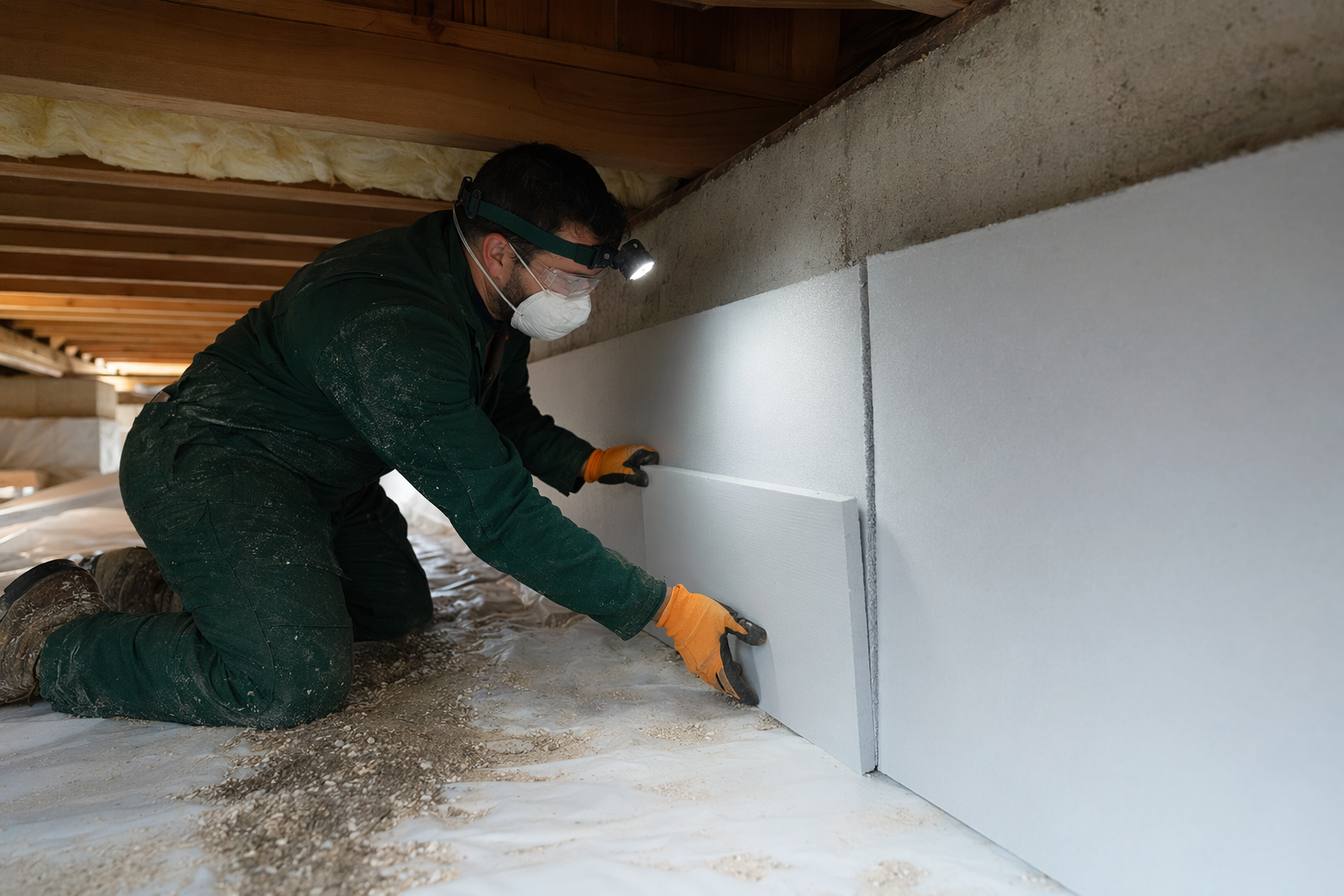
Where crawlspace and basement insulation fits
Crawlspaces and basements sit close to the ground. That means they often bring in cold air, damp air, and musty smells if they are not sealed and insulated well. In many homes, the best results come from treating air leaks, moisture, and insulation together.
Common project areas include crawlspace walls, basement walls, rim joists, and sometimes the floor above a crawlspace. Installers may use fiberglass batts, rigid foam board, blown-in products in certain assemblies, or spray foam, depending on the space and local code.
R-value is a simple way to describe how much the insulation slows heat flow. Higher R-value means more resistance to heat moving through the area. But more is not always better. The goal is usually to reach the recommended level for your climate zone and assembly, not to keep adding insulation forever. You can compare broader pricing at costs and learn what to expect before you get matched.
How the job usually works
Most crawlspace or basement insulation jobs follow the same basic steps.
1. Assessment: The installer looks at the space, access, existing insulation, signs of moisture, exposed dirt, air leaks, ductwork, pipes, and rim joists. They should also note whether the crawlspace is vented or unvented and whether the basement is finished or unfinished.
2. Prep and air-sealing: Before insulation goes in, gaps and bypasses are often sealed. This can include cracks at rim joists, penetrations around pipes and wires, and other leakage points. If there is damaged or wet insulation, it may need to be removed first.
3. Moisture control: In many crawlspaces, a ground vapor barrier or wall liner is a key part of the job. In basements, the installer may recommend insulating specific walls or rim joists while avoiding approaches that can trap moisture in the wrong place.
4. Insulation install: The installer places the chosen material in the agreed areas and to the agreed depth or thickness. In some homes, walls are insulated. In others, the floor system above the crawlspace is insulated. The best method depends on moisture conditions, use of the space, and code requirements.
5. Final check: The crew should confirm coverage, thickness, access doors, and any areas left uninsulated on purpose. Ask for the final scope in writing, including the R-value the completed job is expected to reach.

Typical installed cost range
Installed cost for crawlspace or basement insulation is usually about $1.50 to $7.00 per square foot as a typical range. More complex projects, heavy prep, moisture work, or spray foam can run higher.
This is an estimate, not a quote. The real price depends on the area insulated, the R-value target, the material, your home's age and access, removal of old insulation, moisture-related prep, and your region. Rim joist work, encapsulation-style details, and tight access can also change pricing.
If you want a clearer idea before talking to installers, Thermline can help you compare options and local pricing expectations through get matched.
How long it usually takes
A small, straightforward job may take part of a day to 1 day. A medium project often takes 1 to 2 days. A larger crawlspace with cleanup, air-sealing, vapor barrier work, or difficult access can take 2 to 4 days or more.
The timeline depends on the size of the space, how easy it is to move around, whether old insulation must be removed, the material being installed, drying time for some products, and whether repairs or moisture issues must be addressed first. If permits are required in your area, that can also affect the schedule.
Pros and cons
What to ask an installer
Get the scope and price in writing before any deposit. Make sure the proposal clearly says what areas are included and what work is not included.
Verify the installer before you hire
Hire licensed and insured insulation installers, and verify the license and insurance yourself. Ask for the full scope, target R-value, materials, prep steps, and payment schedule in writing. It also helps to review a checklist like how to vet an insulation installer.
Thermline is a free matching service. We help homeowners connect with local insulation installers for projects like crawlspace and basement insulation. We do not perform the work ourselves, and we do not replace your responsibility to confirm licensing, insurance, permits, and code requirements.
Crawlspace and basement insulation can help make your home warmer and less drafty, especially over cold floors. The best results usually come from combining insulation with air-sealing and moisture control, then hiring a licensed and insured installer to do the work to the right R-value.