Spray foam insulation
Spray foam insulation can help with **comfort, drafts, and energy waste** because it adds insulation and helps block air leaks at the same time. It is often used in attics, crawlspaces, rim joists, walls, and other hard-to-seal areas — but it is not the best fit for every home or every budget.
Where spray foam fits
Spray foam is a two-part insulation material that expands after it is applied. There are two main types: open-cell and closed-cell. Both can reduce air leakage. Closed-cell usually has a higher R-value per inch and is more dense. Open-cell is lighter and can be a lower-cost option in some projects.
R-value is a simple way to describe how strongly insulation slows heat flow. A higher R-value means more resistance to heat moving in or out. But more is not always better forever. The right target depends on your climate zone, the part of the house being insulated, and local code.
Spray foam is often considered when a home has hard-to-reach gaps, awkward framing, rim joists, kneewalls, or places where both insulation and air-sealing matter. It can work well as part of a larger plan with attic insulation, crawlspace work, or weatherization. If you want to compare materials and budget options, see cost guides or get matched with licensed, insured installers near you.
How spray foam insulation works
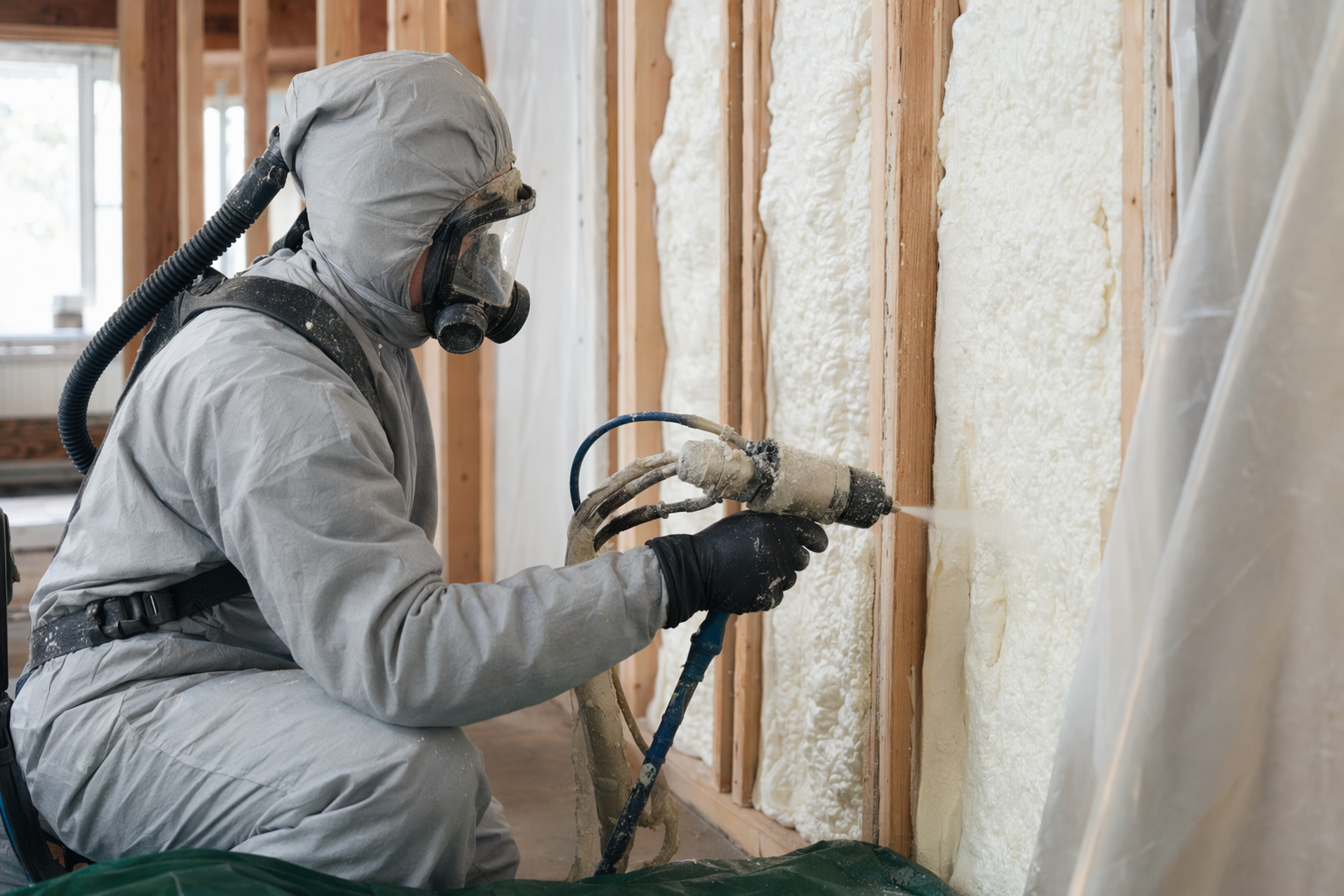
Spray foam is mixed on site and sprayed into the target area. It expands, fills cracks and voids, and then cures in place. That is why people often choose it for areas where batt or blown-in insulation may leave gaps.
Open-cell foam expands more and stays softer. Closed-cell foam is more rigid and usually provides more R-value in less thickness. Which one makes sense depends on the location, moisture conditions, assembly design, code, and budget.
A good installer should explain why foam is being recommended in that specific area instead of treating it like a one-size-fits-all answer.

What the job usually looks like
Most spray foam jobs follow a similar path:
- Assessment. The installer measures the area, looks at access, checks existing insulation, and notes moisture, ventilation, or safety concerns.
- Prep and air-sealing plan. The crew protects nearby surfaces, clears access, and may recommend sealing key gaps first or removing damaged old insulation if needed.
- Application. Foam is sprayed to the planned depth in the selected area, such as roofline slopes, wall cavities, rim joists, or crawlspace sections.
- Curing and trim. After the foam sets, excess material may be trimmed where needed.
- Final check. The installer reviews coverage, depth, and the expected finished R-value with you.
The exact process can change by project. Access, temperature, existing materials, and local code all matter. Ask for the planned scope in writing before you pay a deposit.
Typical installed cost range
Spray foam is usually one of the more expensive insulation options, but it can make sense where space is limited or air leakage is a big problem.
A typical installed cost is often around $1.50 to $4.50+ per square foot for open-cell spray foam and $2.50 to $7.00+ per square foot for closed-cell spray foam. These are estimates, not quotes.
Your real price depends on the area insulated, the R-value target, the material used, thickness, the home's age and access, whether old insulation must be removed, and your region. Small jobs, difficult access, or detailed sealing work can raise the per-square-foot cost.
If you want local pricing, get matched with licensed and insured installers and compare written estimates.
How long it takes
Many smaller spray foam jobs can be completed in one day. Medium or more complex projects may take two to three days. Large attic, crawlspace, or whole-home jobs can take longer.
The timeline depends on the size of the area, prep work, drying or moisture issues, removal of old insulation, weather conditions, and how easy the space is to access. Ask the installer how long the work itself should take and when the area can be used again.
Pros and cons of spray foam
What to ask — and how to verify the installer
Before you hire anyone, ask clear questions and compare answers. You can also review how to vet an insulation installer before signing a contract.
Always hire licensed and insured insulation installers where required, and verify the license and insurance yourself. Get the scope, materials, estimated thickness, cleanup, timeline, and payment terms in writing. Follow local permits and code.
Spray foam insulation can help stop drafts and add insulation in one step. It can work very well in the right places, but it costs more than many other options, so it is smart to compare written estimates and ask what R-value the job will reach.