Blown-in & batt insulation
Blown-in and batt insulation are two of the most common ways to make a home more comfortable and reduce wasted heating and cooling. They are often **more budget-friendly than foam**, and they work well in many attics, walls, floors, and bonus rooms when the right material and R-value are chosen for the space.
Where blown-in and batt insulation fit best
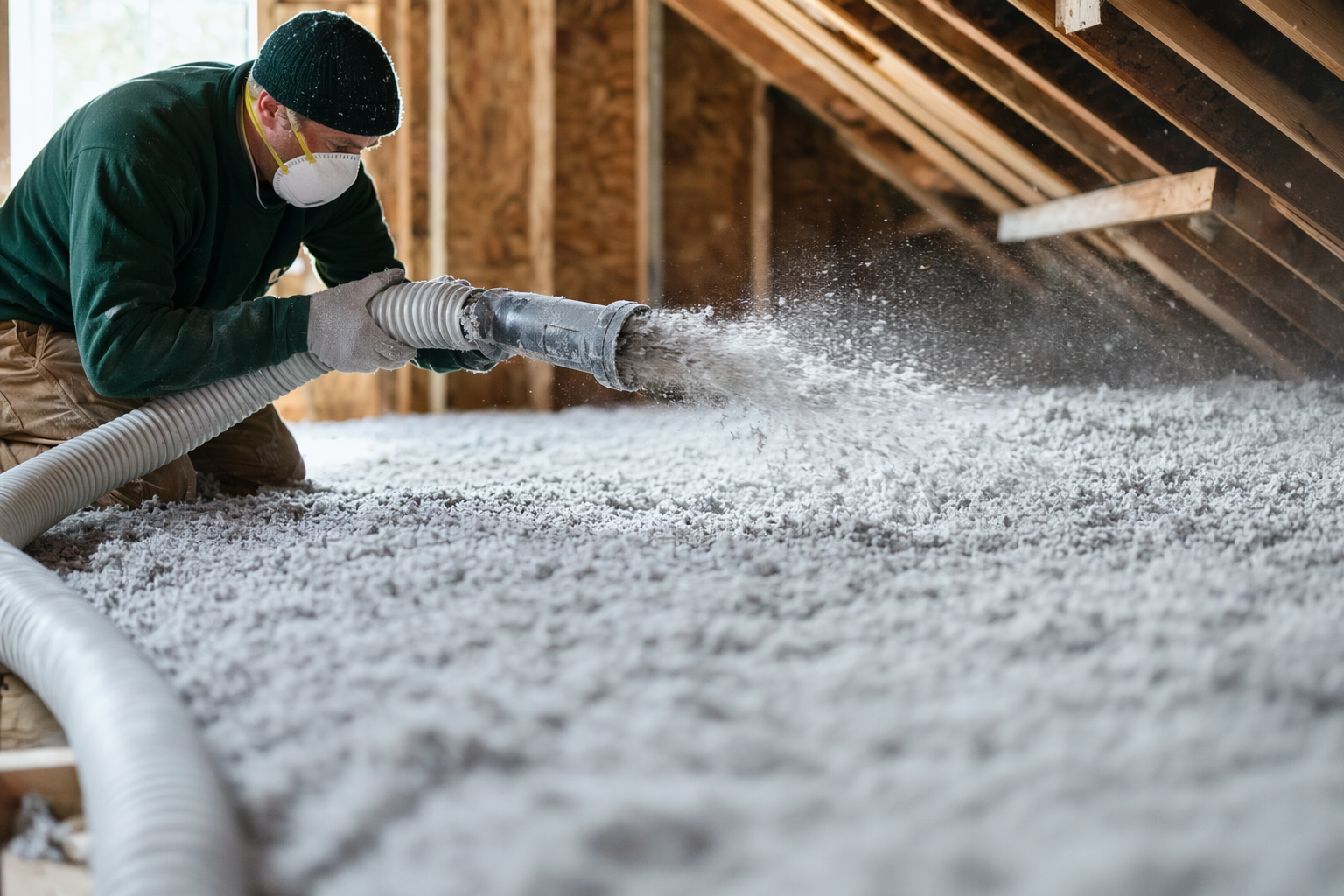
Blown-in insulation is loose-fill material that is installed with a machine. It is commonly used in attics and sometimes in closed wall cavities. The two common types are fiberglass and cellulose.
Batt insulation comes in pre-cut rolls or panels, usually fiberglass. It is often used in open wall cavities, floors, crawlspaces, basement ceilings, and attics where the framing is easy to reach.
These materials are popular because they are widely available, familiar to many installers, and often cost less than spray foam. The best choice depends on the part of the home, the climate, existing insulation, air leaks, moisture conditions, and the R-value target.
R-value is a simple way to measure how well insulation slows heat flow. A higher R-value means more resistance to heat moving in or out, but more is not always better forever. Past the recommended level for your climate zone, the benefit gets smaller.
If you want a broader price overview, see insulation costs.
How the job usually works
A typical blown-in or batt insulation job has a few main steps:
1. Assessment. The installer measures the area, looks at existing insulation, checks access, and notes issues like gaps, exposed wiring concerns, moisture signs, or uneven coverage.
2. Prep and air-sealing. Before new insulation goes in, many homes benefit from sealing air leaks around attic penetrations, top plates, plumbing openings, duct boots, or rim areas. This step can matter a lot because insulation helps slow heat flow, but air leaks can still let conditioned air escape. Learn more about air sealing.
3. Installation. For blown-in jobs, loose-fill material is fed through a hose and spread to a target depth. For batts, pieces are cut and fitted between framing members. Good fitting matters. Gaps, compression, and missed spots can reduce performance.
4. Final check. The installer should confirm coverage, thickness, and the expected R-value reached by the finished job. You should also get the scope in writing before any deposit.
Thermline is a free matching service. We can help you connect with licensed, insured installers near you through get matched.

Typical installed cost range
Installed cost for blown-in or batt insulation is usually about $1.50 to $4.50 per square foot for many standard residential projects.
That is a typical estimate range, not a quote. Some simpler attic top-offs may land lower, while harder jobs can go higher. The real price depends on:
- the area being insulated
- the R-value target
- the material used
- your home's age and ease of access
- whether old insulation must be removed
- air-sealing or prep work needed
- your region and local labor rates
Closed wall work, hard-to-reach spaces, or projects that include removal of damaged insulation can cost more than an open attic or unfinished floor system.
How long installation takes
Many blown-in or batt insulation jobs take part of a day to 2 days.
A straightforward attic job may be completed in one day. A larger project with prep work, air-sealing, difficult access, or multiple areas of the home can take longer. Removal of old insulation can also add time.
Ask the installer how much time is for prep and how much is for the actual insulation work. Also ask whether you need to clear storage items, stay out of certain rooms, or plan for noise from blowing equipment.
Pros and cons
Questions to ask before you hire
Use these questions when comparing estimates and scope. You can also review how to vet an insulation installer.
Verify the installer before you sign
Always hire licensed and insured insulation installers where required, and verify the license and insurance yourself. Ask for the full written scope, including the material, the areas included, and the R-value the job is expected to reach.
Rebates, utility programs, and federal tax credits may sometimes help with cost, but they change and vary. Confirm current program rules directly with the utility, program administrator, or a tax professional before you rely on them.
Thermline does not install insulation or perform home inspections. We are a free service that helps homeowners compare local installer options.
Blown-in and batt insulation are common, lower-cost ways to insulate attics, walls, and floors. The right choice depends on the space, the material, and the R-value goal, so get the scope in writing and verify the installer's license and insurance before you hire.