Rim Joist Insulation Explained
Rim joists are a small part of the house, but they can have a big effect on comfort. If this area is under-insulated or air-leaky, you may feel cold floors, drafts, or notice musty smells near the basement or crawlspace.
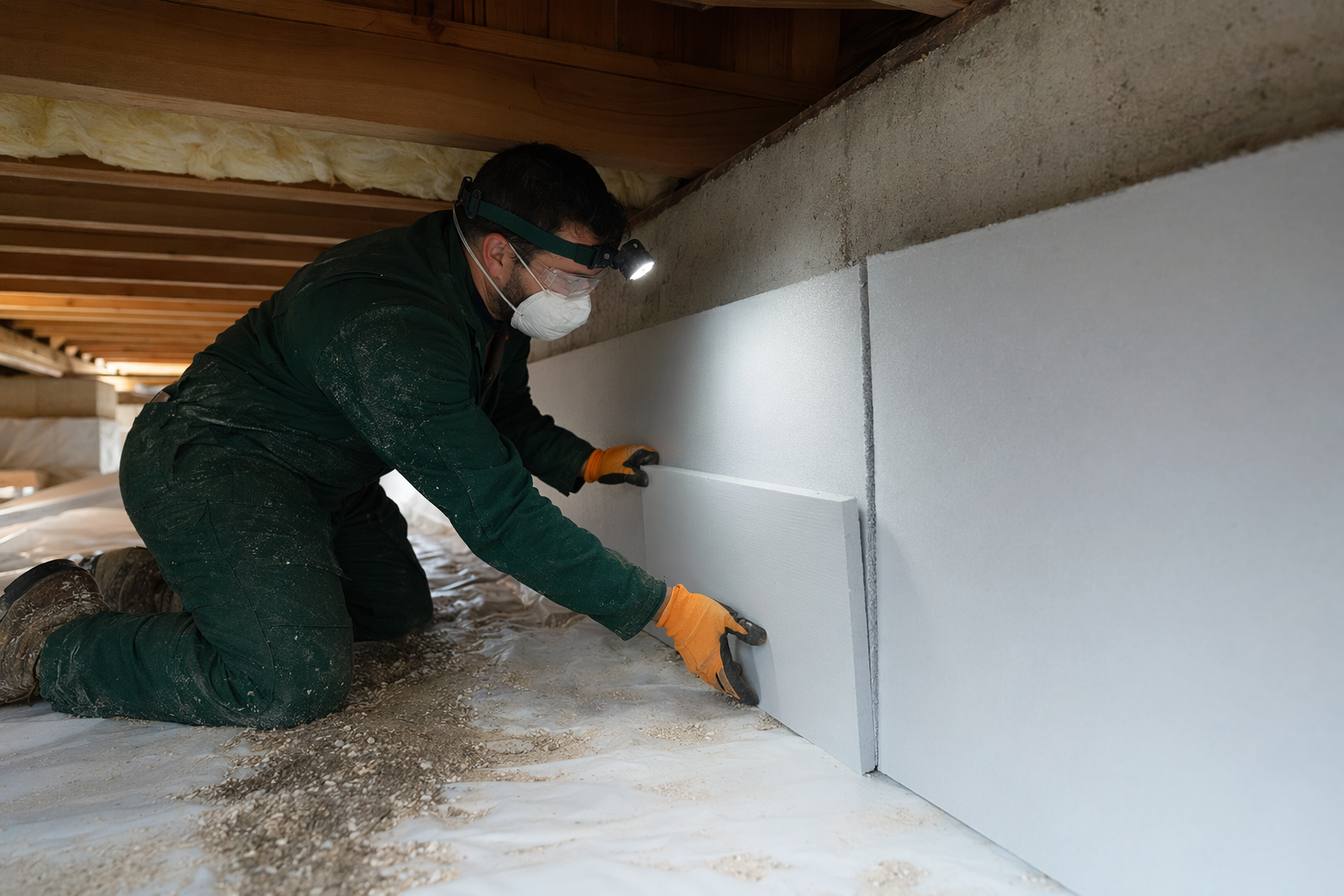
Intro
The rim joist is the band of wood around the edge of the floor framing, usually where the house sits on the foundation. In many homes, this area has gaps, cracks, and very little insulation.
Because it sits at the outer edge of the house, the rim joist can let in outside air. That can make rooms above it feel colder in winter and less comfortable in summer. It can also allow moisture problems if the area is not sealed and insulated the right way.
If you are planning a larger insulation project, rim joists are often worth asking about along with basement, crawlspace, or attic work. For a full project comparison, you can start with costs.
The short answer
Rim joist insulation means adding insulation and usually air-sealing at the outer edge of your floor framing, above the foundation wall. In many homes, this is a smart upgrade because the area commonly leaks air. The best approach depends on the space, moisture conditions, climate, and local code. In general, homeowners often ask installers about air-sealing first, then an insulation material that fits the space and the target R-value, which is a simple way to measure how well insulation slows heat flow. Higher R-value means more resistance to heat loss, but more is not always better once you reach the recommended level for your climate.

Details
Why rim joists matter
Rim joists are easy to overlook because they are not a large open area like an attic. But they are full of seams and penetrations. Pipes, wires, framing joints, and small cracks can all let air move through.
That matters because moving air can carry heat and moisture. If outside air gets in during winter, floors above may feel cold. If damp air reaches cool surfaces, condensation can form. Over time, that can contribute to mold, odor, or wood damage.
This is why many insulation pros talk about rim joists as both an insulation and an air-sealing area, not just a place to stuff in more material. If you want background on choosing a qualified company, see how to vet an insulation installer.
Common insulation approaches
Different homes use different methods. The right choice depends on access, moisture conditions, the existing assembly, and code in your area.
- Spray foam is often discussed for rim joists because it can both insulate and help air-seal in one step. Open-cell and closed-cell products perform differently, so ask what the installer recommends and why.
- Rigid foam board with sealed edges is another common approach. In some homes, this may be paired with another insulation layer.
- Fiberglass or mineral wool batts may be used in some situations, but by themselves they usually do not stop air leaks well. That is why air-sealing is so important.
The best method is not the same in every home. A damp basement, an older house, or signs of bulk water intrusion may change the plan. If there is active water entry, that issue should be addressed before insulation work moves forward.
How to tell if your rim joists may need attention
You may not be able to see the problem right away, but there are some common signs:
- Floors above the basement feel cold
- Drafts near baseboards or along the floor edge
- Basement or crawlspace smells musty
- Visible gaps, old thin insulation, or bare wood at the rim area
- Higher heating and cooling bills without a clear reason
If you are comparing options, ask each installer to explain what R-value the job is intended to reach, whether air-sealing is included, and whether old insulation needs removal. Real pricing is a typical estimate, not a quote, and depends on the area insulated, material, R-value target, access, home age, removal needs, and your region.
What to do next
Start by making a short list of problem areas: cold floors, drafts, odors, or visible gaps at the basement or crawlspace perimeter. Then ask licensed and insured insulation installers to look at the rim joist as part of the whole project, not as a stand-alone guess.
Before you pay a deposit, get the scope in writing. It should say the material, the areas included, whether air-sealing is part of the job, and the planned R-value. You should also verify the installer's license and insurance yourself and follow local permit and code rules.
If you want help finding local companies to compare, Thermline can help you get matched with licensed and insured insulation installers near you. You can also read more about project planning in our guide to how to vet an insulation installer.
The rim joist is the outer edge of the floor above your foundation. If it leaks air or has weak insulation, your floors can feel cold and your house can lose energy.