R-value explained
R-value is the number that helps you compare how well insulation slows heat flow. In simple terms, a **higher R-value means better resistance to heat moving in or out** — but only up to a point. The best target depends on **where the insulation goes, your climate zone, and your home’s condition**, not just the biggest number on the package.
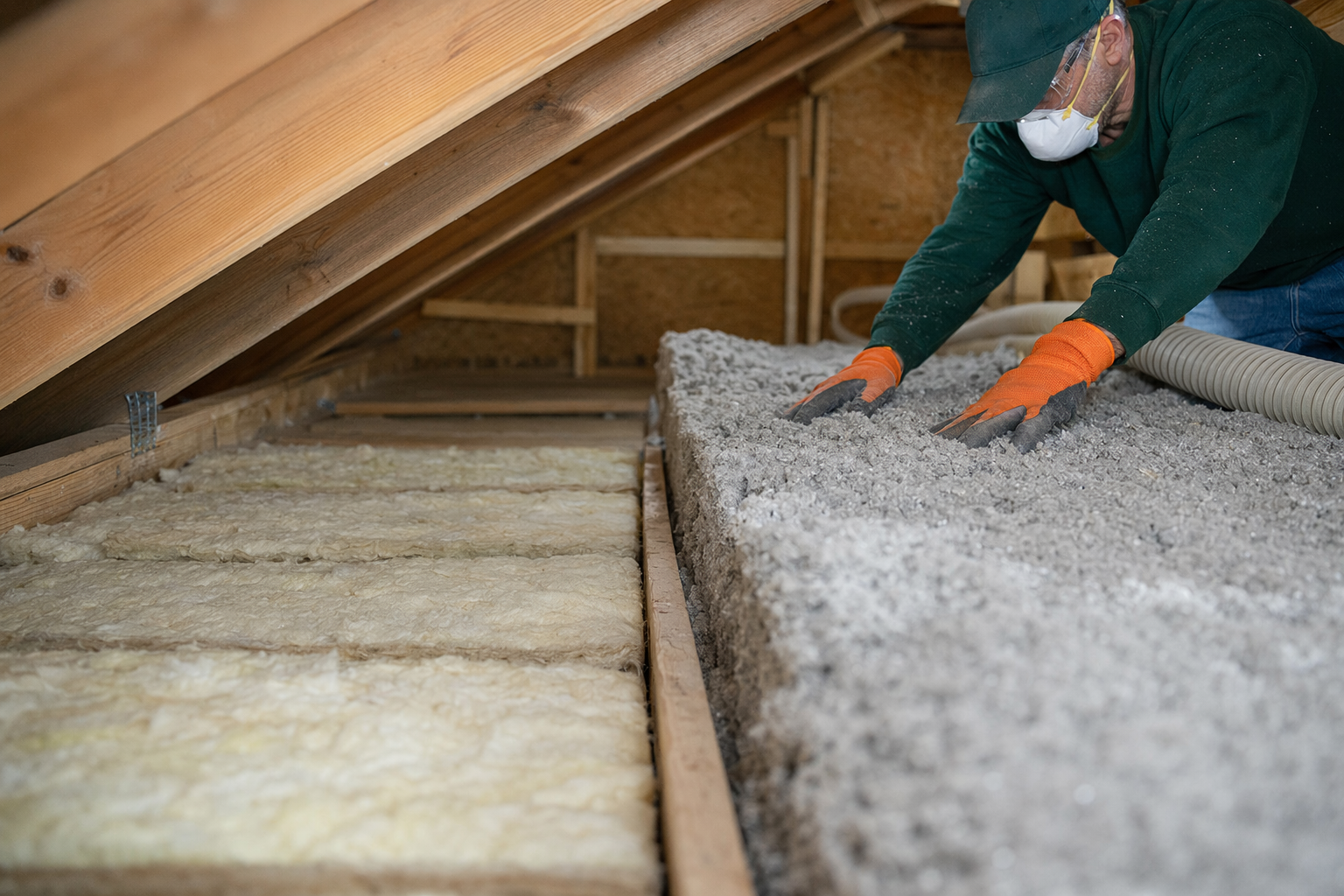
Intro: what R-value means
R-value is a way to measure how strongly insulation resists heat flow. Think of it like a coat for your house. A higher number usually means the insulation does a better job slowing heat from leaving in winter and entering in summer.
But R-value is not the whole story. Your comfort and energy use also depend on air leaks, moisture conditions, installation quality, and whether the insulation fully covers the area. A home with moderate R-value and good air-sealing can perform better than a home with a higher R-value installed poorly.
R-value also works differently depending on the material and the space. For example, blown-in insulation, fiberglass batts, cellulose, and spray foam can all help, but they do not act the same in real homes. Some materials are better for filling gaps. Some are better when space is limited. Some cost more per inch.
If you are trying to decide what level makes sense, start with the recommended range for your climate and the part of the house you want to insulate. Then compare options, typical pricing, and installer scope carefully. You can review typical insulation costs and, if you want help comparing local options, use Thermline to get matched with licensed and insured insulation installers near you.
Key points: how to think about R-value
The most important thing to know is this: the right R-value is a target, not a contest. Once you get near the recommended level for your climate zone, adding much more may bring smaller benefits for the money.
Attics usually have the biggest and most cost-effective insulation opportunity because heat often moves through the top of the house. Walls matter too, but existing wall cavities can limit how much insulation fits inside. Crawlspaces, basements, and rim joists can also affect comfort, floors, and drafts.
When homeowners ask, "What R-value do I need?" the honest answer is: it depends on the location in the home and your local climate. Colder climates usually call for higher attic R-values than warm climates. Walls usually target a lower number than attics because the framing depth is smaller.
Do not assume the highest available number is automatically best. If your attic already has some insulation, it may make more sense to air-seal first, top up to a recommended level, and stop there instead of paying for extra thickness with limited added benefit.

What to do: choose a smart R-value target
1. Start with the area you want to improve. Is the problem in the attic, walls, crawlspace, basement, or a bonus room over the garage? The right R-value target depends on the location.
2. Look up the recommended range for your climate zone. This gives you a practical goal instead of guessing. If you are not sure how the numbers work, begin with R-value explained and compare that to local recommendations and code requirements.
3. Ask for the final R-value in writing. When you talk to installers, ask what R-value the job is expected to reach, what material they plan to use, and whether air-sealing is included.
4. Compare the full scope, not just the price. A lower bid may leave out prep work, ventilation corrections, old insulation removal, baffles, hatch treatment, or cleanup. A higher bid may include these items. Ask questions.
5. Verify license and insurance yourself. Always hire licensed and insured insulation installers and confirm their credentials directly. Follow local permits and code.
6. Check whether the added R-value is worth the extra cost. More is not always better. In many homes, the best value is reaching the recommended level and fixing air leaks, not paying for insulation far beyond that target.
7. Review rebates and tax-credit rules carefully. Utility offers and energy-efficiency tax credits can change. Eligibility, paperwork, and timing vary. Confirm current details with the utility, program administrator, or a tax professional before you rely on savings.
If you want help comparing companies, Thermline is a free matching service. We do not install insulation or provide audits, but we can help you connect with local pros. Before hiring anyone, use this guide on how to vet an insulation installer.
Common mistakes homeowners make
Next step: move from the number to the plan
R-value is a useful tool, but it works best when you use it with the full picture: where the insulation goes, your climate, the existing condition of the space, and the quality of the installation. For many homeowners, the smartest plan is not "the most insulation possible." It is the right level, in the right place, installed the right way.
If you are ready to compare options, start by reviewing typical pricing at costs. Then you can use Thermline to get matched with licensed and insured local insulation installers. Ask each one to list the material, coverage area, and expected final R-value in writing so you can compare clearly.
R-value is the number that shows how well insulation slows heat. A higher number can help, but the best target depends on your climate, where the insulation goes, and how well the job is done. You usually want the recommended level for your area, not just the biggest number possible.