Insulation types compared
Not all insulation works the same way. Some types are better for open attic floors. Some are better inside walls or at rim joists. Some help slow air leaks better than others. This guide compares common insulation types in plain language so you can choose with open eyes before you ask for estimates.
Start here: the best insulation type depends on the job
Homeowners often ask, "What is the best insulation?" The honest answer is: it depends on where the insulation is going, how much space is available, your climate zone, and your budget.
A good comparison should look at more than one thing. You want to compare:
- R-value
- air-sealing ability
- moisture behavior
- installation access
- typical cost range
- how well the material fits the part of the house being insulated
R-value is a simple way to describe how much the insulation slows heat flow. A higher R-value means better resistance to heat moving through that area. But higher is not always better forever. There are diminishing returns once you get near the recommended level for your climate zone. If you want a simple breakdown, see R-value explained.
Typical installed cost can vary a lot. Real pricing depends on the area insulated, the R-value target, the material, your home's age and access, whether old insulation must be removed, and your region. You can review broader costs before you compare estimates.
Key points: how blown-in, batt, spray foam, and rigid board compare
Here is the short version: no single material wins in every situation.
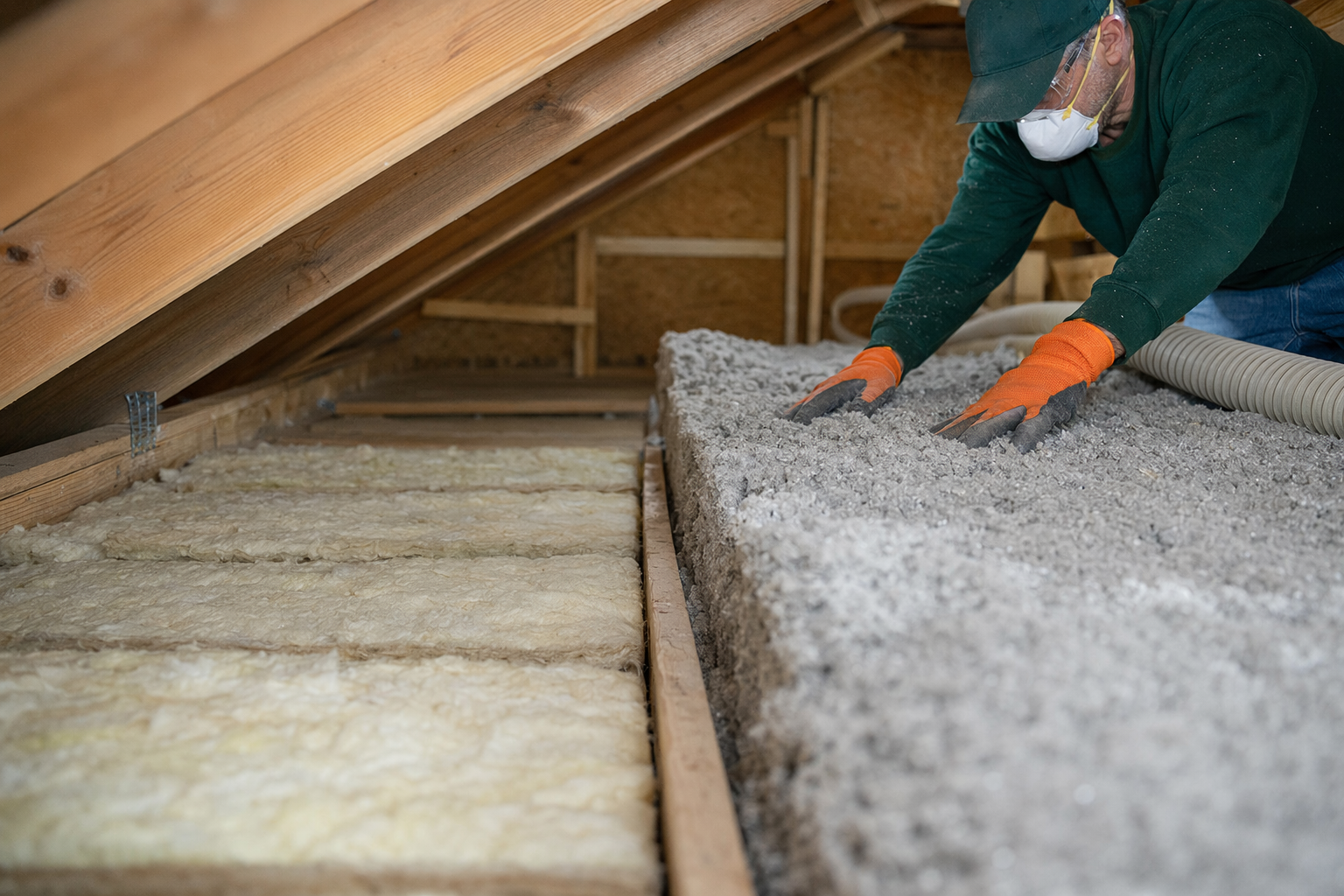
Blown-in insulation often works well in attics and some closed wall cavities. It can cover uneven spaces better than batts. Loose-fill materials can be a practical choice when you want to add insulation over an existing attic floor. It usually does not air-seal by itself, so many homes benefit from air-sealing first.
Batt insulation is common, familiar, and often lower in upfront cost. It can work well in open wall bays, floors, and unfinished spaces when it is carefully cut and fitted. Its weakness is installation quality. Small gaps, compression, or misalignment can reduce real-world performance.
Spray foam insulation can insulate and help air-seal at the same time. That can make it useful in hard-to-seal areas like rim joists, some rooflines, and irregular cavities. It usually costs more than blown-in or batt options, and the right product depends on the assembly and local code.
Rigid board insulation is often used on foundation walls, basement walls, exterior sheathing, or special retrofit details. It can provide solid R-value in limited space, but seams and edges matter. It is less common as the main insulation solution for a simple attic floor upgrade.
If you are focused on attic upgrades, attic insulation is often where homeowners see the clearest comfort improvement first.

What to do before you choose
Picking an insulation type gets easier when you go step by step.
1. Start with the problem you want to solve. Is the upstairs too hot? Are winter rooms drafty? Are energy bills high? Is the crawlspace uncomfortable? The location matters as much as the material.
2. Ask what R-value the job is meant to reach. Do not compare one estimate showing a low final R-value to another showing a higher one. You need apples-to-apples scope.
3. Ask whether air-sealing is included. In many homes, stopping air leaks first can matter as much as adding more insulation. An attic floor upgrade, for example, may perform better when gaps around penetrations are sealed before insulation is added.
4. Match the material to the area. Open attic floors, enclosed walls, basements, and roof decks are different assemblies. A material that works well in one place may be a poor fit in another.
5. Compare written estimates carefully. Make sure the estimate says the material type, the area being insulated, the target R-value, whether old insulation removal is included, whether air-sealing is included, and cleanup details.
6. Hire licensed and insured installers, and verify that yourself. Ask for license and insurance details. Follow local permits and code requirements. Get price and scope in writing before any deposit.
7. Get matched with local pros if you want help comparing options. Thermline is a free matching service. We help homeowners connect with licensed and insured insulation installers near them through get matched. You can also review this guide on how to vet an insulation installer before you decide.
Common mistakes when comparing insulation types
Next step: compare options with a clear checklist
The goal is not to memorize every insulation product. The goal is to ask better questions.
When you talk to installers, ask:
- Which insulation type fits this area of my home, and why?
- What R-value will this job reach?
- Is air-sealing included?
- Do you recommend removing any old insulation first?
- What parts of the job might change the final price?
If two estimates recommend different materials, that does not automatically mean one is wrong. It may mean the contractors are solving the problem in different ways. Compare the scope, the target R-value, and whether the plan fits the part of the house being insulated.
Thermline does not install insulation or provide quotes. We are a free matching service that helps homeowners connect with licensed and insured local insulation installers. If you want to compare options side by side, start with get matched.
There is no one best insulation for every home. The right choice depends on where it goes, what R-value you need, and whether air leaks also need attention. Get written estimates, compare the final R-value and scope, and hire licensed and insured installers you verify yourself.