Home energy audits
A home energy audit, also called a home energy assessment, helps you understand **where your home is losing comfort and wasting energy**. It does not fix the problem by itself. It gives you a clearer picture so you can decide whether insulation, air sealing, ventilation changes, or other upgrades may make sense.
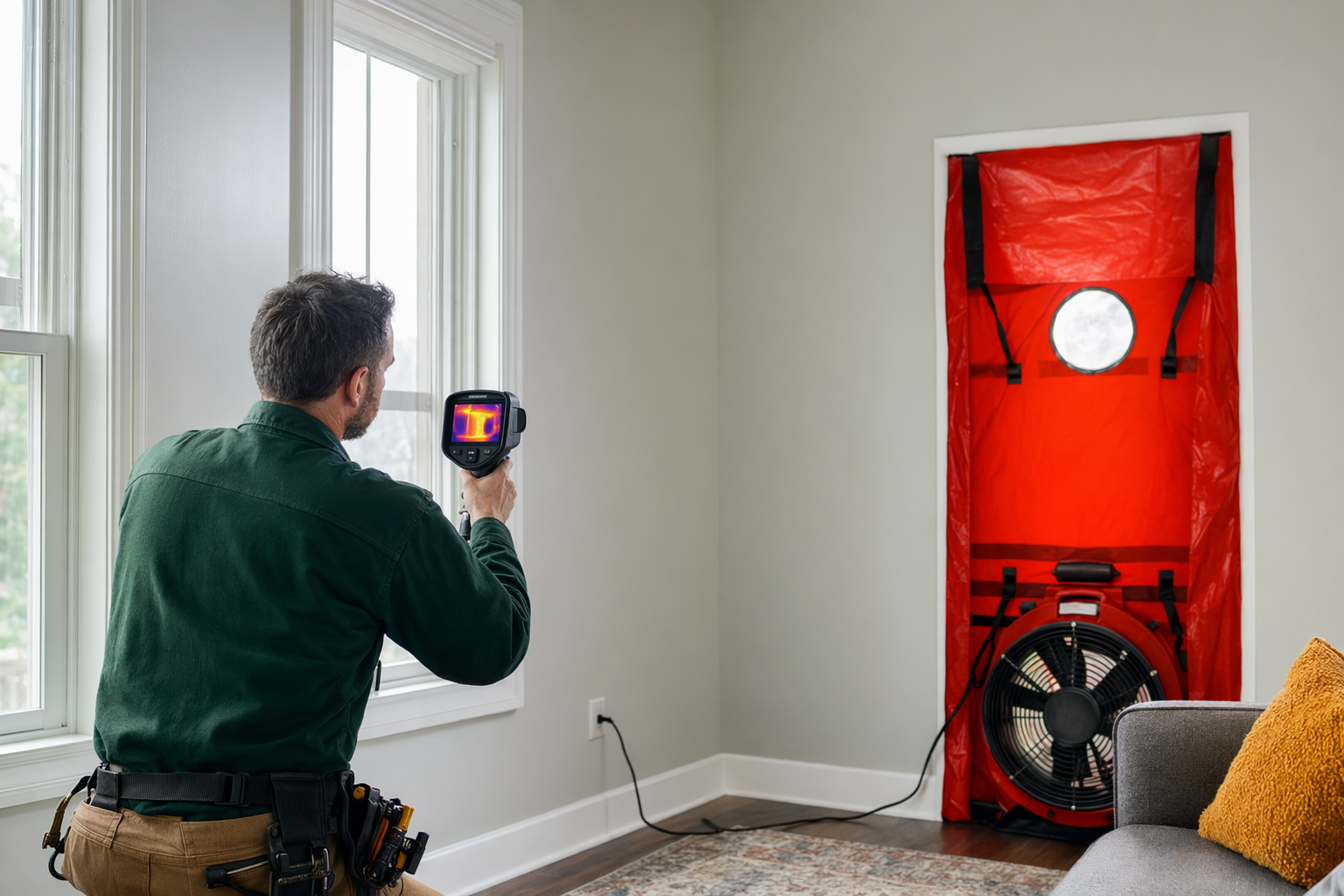
What a home energy audit is
A home energy audit is a step-by-step review of how your home uses and loses energy. The goal is simple: find the biggest trouble spots first.
A typical assessment may look at the attic, walls, crawlspace or basement, ducts, windows, doors, and areas where outside air may be leaking in. Some audits also include tools such as infrared imaging or a blower-door test. These tools can help show where air leaks are happening and where insulation may be missing or underperforming.
An audit is not just about insulation thickness. It is about how the whole home works together. For example, an attic may feel under-insulated, but the bigger issue could be air leaks around recessed lights, plumbing openings, or the attic hatch. In that case, air sealing before adding insulation may be the smarter plan. Our guide to attic air sealing before insulating explains why this order matters.
Thermline is a free matching service. We help homeowners connect with licensed and insured insulation installers near them. We do not perform audits, install insulation, or give construction advice. If you want estimates after an assessment, you can get matched for free.
Key points to know before you start
A good audit helps you make better decisions, not faster guesses. It can help you avoid paying for the wrong upgrade or adding insulation where another issue should be handled first.
R-value is an important part of the conversation. In plain language, R-value measures how well insulation slows heat flow. A higher R-value means more resistance to heat moving through that area. But more is not always better forever. After your climate zone's recommended range, the benefit can level off. The best target depends on your area, the part of the house being insulated, and local code.

What to do after an audit
If you already had an energy audit, the next step is turning the findings into a clear insulation plan.
1. Read the findings slowly. Look for the biggest problem areas, not just the longest list. Focus on where comfort loss and air leakage seem most serious.
2. Separate air leaks from insulation gaps. If the report shows both, ask which should be addressed first. In many homes, sealing leaks before insulating improves results.
3. Ask for plain-language priorities. A useful plan should say what matters now, what can wait, and what may not be worth doing yet.
4. Confirm the target R-value. Ask what R-value is recommended for your climate zone and for that part of the home. Make sure any estimate says what the finished job is expected to reach. For more background, see how to vet an insulation installer.
5. Compare insulation types carefully. Blown-in fiberglass, blown-in cellulose, fiberglass batts, and spray foam each fit different situations. The best choice depends on the space, access, moisture concerns, air leakage, and budget.
6. Ask about old insulation. In some cases it can stay. In other cases, damaged, wet, contaminated, or badly compressed insulation may need to be removed first.
7. Check permits and code requirements. Requirements vary by location and by scope of work. Follow local rules.
8. Get multiple written estimates. Compare more than price. Compare the scope, material, area covered, air sealing details, cleanup, and final R-value.
9. Review rebates and tax credits carefully. Some utility and government programs may help reduce out-of-pocket costs, but they change often and eligibility varies. Confirm current details directly with the program, utility, or a tax professional before you rely on them.
10. Only move forward when the plan is clear. If an estimate is vague, rushed, or missing the expected R-value, ask questions before signing.
Common mistakes homeowners make
Your next step
A home energy audit can turn confusion into a plan. It helps you see whether your home likely needs attic insulation, wall insulation, crawlspace or basement insulation, spray foam, blown-in insulation, batt insulation, air sealing, or a combination.
If you are ready to compare options, Thermline can help you get matched with licensed and insured insulation installers near you at no cost. Then you can review written estimates, compare scope and R-value targets, and choose the pro that fits your needs.
If English is not your first language, take your time. Ask for the scope in simple words. You should understand what area will be insulated, what material will be used, and what R-value the job should reach before you sign anything.
A home energy audit helps you find where your home may be losing heat or cool air. It can show whether air sealing or insulation should come first. Before you hire anyone, compare written estimates and make sure the job lists the area, material, and target R-value.