Insulating a Garage or Bonus Room Over a Garage
A garage and a room above it often feel very different from the rest of the house. The bedroom, office, or bonus room over the garage may be too cold in winter, too hot in summer, or hard to keep comfortable all year. Good insulation can help, but the right plan depends on **where heat is moving** and how the space was built.
The short answer
Yes, insulating a garage or a bonus room over a garage can improve comfort and energy use. In many homes, the biggest problem is not just the garage walls. It is the floor between the garage and the room above, plus air leaks around rim joists, wiring holes, ducts, and knee walls. The best approach depends on your climate, the current insulation, and the R-value target for your area. R-value means how well insulation slows heat flow. Higher R-value resists heat better, but more is not always better once you reach the recommended level for your climate. For a closer look at typical pricing, see insulation costs.
Where the problem usually is
If the room above the garage is uncomfortable, the issue is often a combination of missing insulation and air leakage.
Common trouble spots include:
- The garage ceiling, which is the floor of the room above
- Knee walls or short attic walls beside the bonus room
- Attic slopes around finished rooms over garages
- Rim joists at the edge of the floor system
- Ductwork running through the garage or attic
In many homes, outside air leaks into these areas through small gaps. Even good insulation may not work as well if air is moving around it. That is why some projects include air sealing along with insulation. You can learn more about that at air sealing.
If there is a garage under living space, local code and fire-separation rules may also matter. A licensed and insured installer should explain the scope clearly and tell you whether permits are needed in your area.

What insulation may be used
The best material depends on access, budget, and the area being insulated.
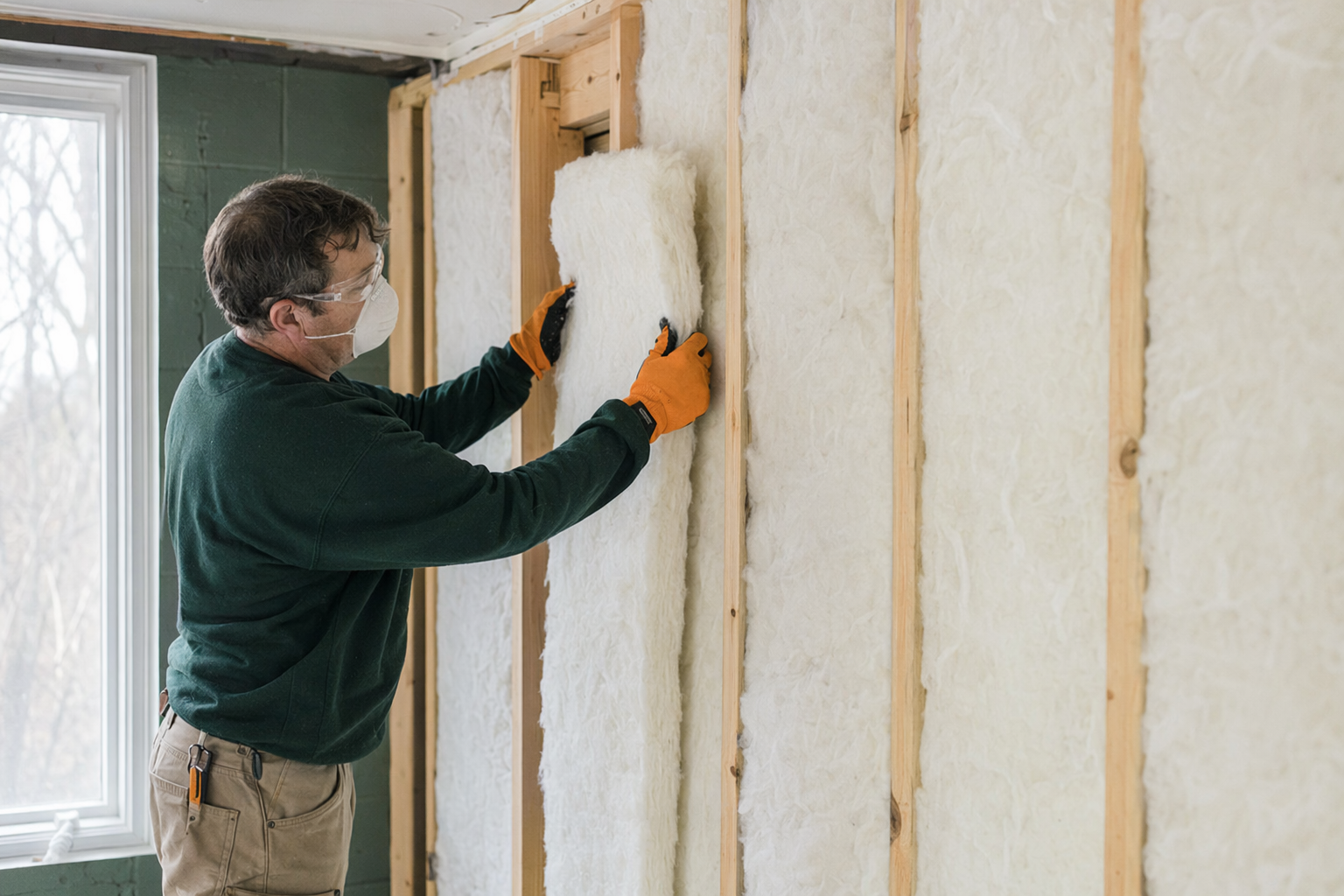
- Fiberglass batts are often used in open floor cavities, wall cavities, and some knee walls.
- Blown-in fiberglass or cellulose may be used in enclosed attic areas or hard-to-reach spaces.
- Spray foam may be used in selected areas where air sealing and insulation are both important, such as rim joists or irregular cavities.
The goal is not to pick the "strongest" product. The goal is to match the material to the space and reach an appropriate R-value for your climate zone. Real cost is a typical range, not a fixed number, and depends on the area insulated, the material, access, the home's age, removal of old insulation, and your region.
A good written estimate should say what area will be insulated, what material will be used, and what R-value the job is expected to reach.
Special issues with bonus rooms over garages
Rooms over garages can be tricky because they may have more exposed surfaces than a normal bedroom. Some have floor exposure over the garage, side walls next to attic spaces, and sloped ceilings under the roof.
That means one upgrade may not solve everything. For example, adding insulation to the garage ceiling may help, but the room can still feel uncomfortable if the knee walls leak air or if ducts in the space lose heat.
It is also important to think about moisture and ventilation. If a garage or adjacent attic has moisture problems, insulation alone may not fix comfort issues. The installer should explain what they can do and what is outside their scope. Thermline is a free matching service, not an installer, but we can help you compare local options and prepare questions using our guide on how to vet an insulation installer.
What to do next
- Make a short list of the comfort problems: too cold, too hot, drafts, noisy room, uneven temperatures.
- Ask each installer which areas they believe are the main problem: garage ceiling, knee walls, attic slopes, rim joists, or ducts.
- Get the scope in writing, including material, area covered, and the R-value the job will reach.
- Verify that the installer is licensed and insured yourself before you pay a deposit.
- Ask whether local permits or code requirements apply.
- Compare typical price ranges and then request local estimates.
If you want help finding licensed and insured insulation installers near you, you can use Thermline's free installer matching service.
The room over a garage is often uncomfortable because heat moves through the floor, walls, and nearby attic areas. A licensed and insured installer can help you decide which parts to insulate and what R-value makes sense for your climate.