How much insulation you need
Insulation is not just about adding more material. It is about reaching the **right R-value for your climate and your home**. Installers usually look at the area to be insulated, the insulation already in place, and the target R-value for that space. Then they use that information to build an estimate you can compare.
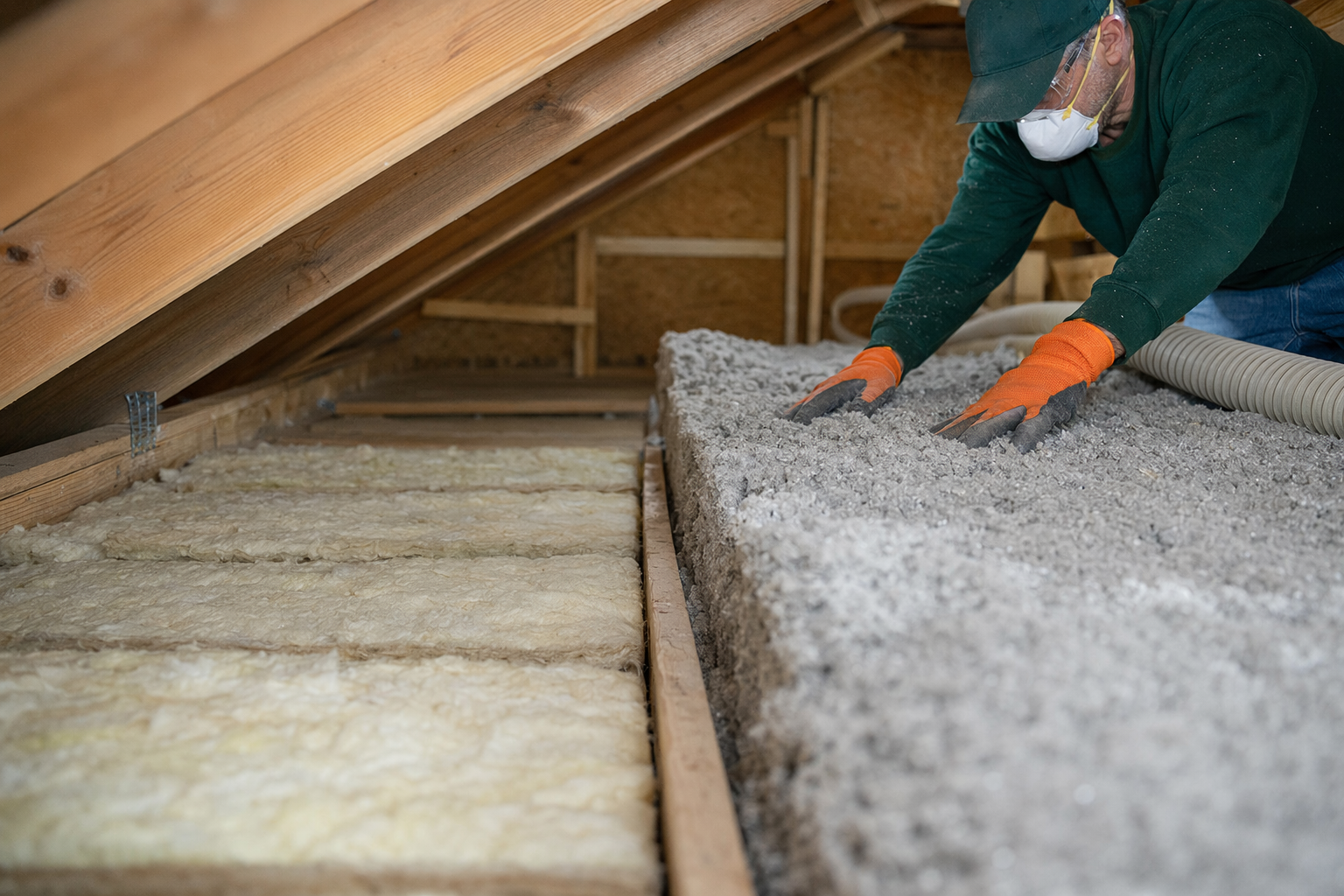
Start with the target, not just the material
When homeowners ask how much insulation they need, the real question is usually: what R-value should this part of the house reach? R-value is a simple way to describe how well insulation slows heat flow. A higher R-value means better resistance to heat moving in or out. But that does not mean the highest possible number is always the best choice. After the recommended range for your climate zone, the benefit can level off.
Most homes do not need the same amount everywhere. The attic, exterior walls, crawlspace, basement, and rim joists can all have different targets. A house in a cold climate may need a higher attic R-value than a house in a warm climate. Older homes may also have uneven coverage, missing insulation, or air leaks that affect comfort even before new insulation is added.
That is why installers usually measure square footage, check the type and depth of existing insulation, and compare that with the recommended target for the area being insulated. If you want a simple overview before talking to installers, see costs or start with get matched to connect with licensed, insured insulation installers near you.
Key points installers use to figure out how much insulation a home needs
A good estimate is based on the space being insulated and the performance goal, not just a price per bag, batt, or square foot.
For example, an attic estimate often starts with the attic floor area. Then the installer checks how much insulation is already there and what R-value that existing layer likely provides. From there, they calculate how much additional material is typically needed to reach the target range.
The same idea applies in walls, crawlspaces, basements, and other areas, but access, framing depth, moisture conditions, and air leakage can change the plan.
If you want help comparing installers, our guide on how to vet an insulation installer can help you review scope and paperwork more carefully.

What to do before you compare estimates
Use these steps to make the process easier and avoid apples-to-oranges quotes.
1. Choose the area you want to improve first. Many homeowners start with the attic because it is often one of the most cost-effective areas to upgrade.
2. Ask what the current insulation level appears to be. Installers may estimate this from the insulation type and measured depth. In some cases, hidden areas may be harder to confirm without more investigation.
3. Ask what R-value range is typically recommended for your climate zone and that part of the house. This gives you a target you can compare across bids.
4. Ask whether air-sealing is recommended before or along with insulation. In many homes, stopping major air leaks can improve comfort and help insulation perform better.
5. Get the scope in writing. The estimate should say the area being insulated, the material type, the intended R-value or installed depth, whether old insulation removal is included, and whether cleanup is included.
6. Check license and insurance yourself. Always hire licensed and insured insulation installers where required, and verify that information directly before you pay a deposit.
7. Compare typical cost ranges, not just the lowest number. Insulation pricing is usually an estimate until the installer confirms conditions on site. Real cost depends on area insulated, target R-value, material, home age, access, old insulation removal, and region. You can review general pricing on costs.
8. Ask about permits and code in your area. Requirements vary by location and by the type of work being done. Follow local rules.
9. Confirm rebates or tax credits directly. These programs change often and may depend on the utility, state, product, paperwork, and timing. Always confirm current details with the program administrator, utility, or a tax professional.
10. Use a matching service if you want to save time. Thermline is a free service that helps homeowners connect with local insulation installers for comparison, not an installation company. You can get matched when you are ready.
Common mistakes homeowners make
Next step: get clear numbers you can compare
The easiest way to understand how much insulation your home needs is to ask for estimates that all use the same basic framework: area, current condition, target R-value, material, and written scope. That helps you compare value instead of guessing.
Thermline is a free matching service. We help homeowners connect with licensed, insured insulation installers near them so they can compare options with less stress. If you are ready to move forward, get matched and ask each installer to put the target R-value, project area, and total scope in writing before any deposit.
Installers usually measure the space, check what insulation is already there, and set a target R-value for your climate. Then they estimate how much more insulation is needed. Get the target R-value and full scope in writing so you can compare estimates fairly.