Crawlspace Encapsulation Basics
If your floors feel cold, the air smells musty, or pipes and ducts run through a damp crawlspace, you may be hearing about **crawlspace encapsulation**. This guide explains what it usually means, when it may help, and how to plan the job carefully with a licensed, insured insulation installer.
Intro
A crawlspace is the shallow area under some homes. When outside air and ground moisture get into that space, the result can be damp air, uncomfortable floors, and higher heating or cooling use.
Crawlspace encapsulation is a way to reduce moisture and outside air movement in that area. It is not the same as simply stuffing insulation between floor joists. In many homes, the work involves sealing the crawlspace more completely and then insulating the right surfaces for that setup.
The short answer
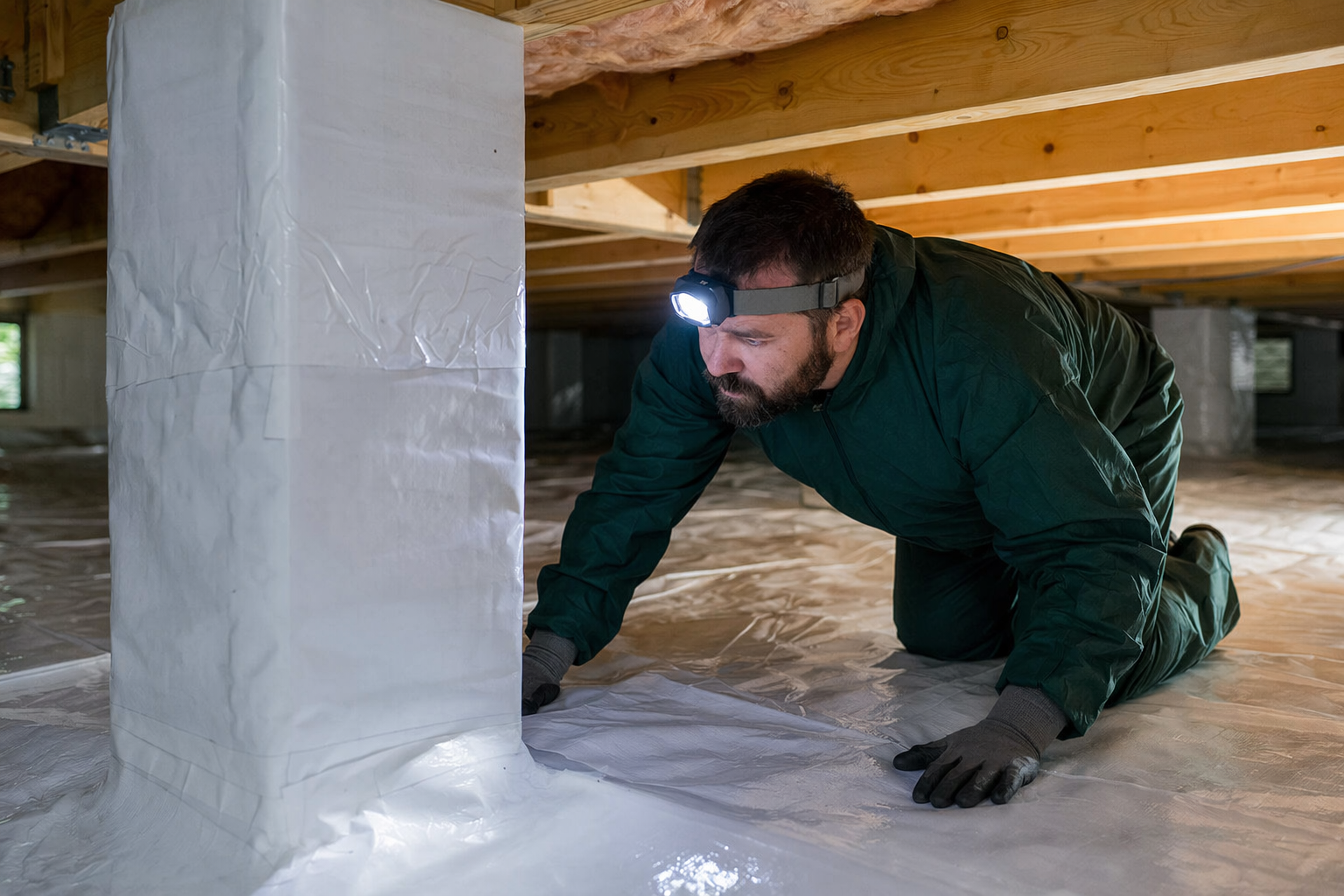
In plain language, crawlspace encapsulation usually means covering the ground with a heavy vapor barrier, sealing gaps and vents as appropriate for the design, and insulating key areas such as crawlspace walls, rim joists, or other surfaces based on local code and the home's condition. The goal is to help control moisture, air leaks, and temperature swings. It can be a good option in some homes, but the best approach depends on your climate, existing moisture issues, access, and whether the crawlspace has drainage, pest, or structural concerns that should be addressed first.

Details
What is usually included in crawlspace encapsulation?
Every home is different, but a typical scope may include:
- A ground vapor barrier over exposed soil
- Sealing seams, edges, and penetrations
- Air-sealing around gaps where outdoor air enters
- Insulating selected areas such as crawlspace walls or rim joists
- Sometimes adding a conditioned-air strategy or dehumidification, depending on the design
R-value is the measure of how much the insulation slows heat flow. A higher R-value means better resistance to heat moving through that material. But more is not always better forever. There are diminishing returns once you reach the recommended level for your climate zone and assembly. You can learn more in R-value explained.
When encapsulation may make sense
Encapsulation is often discussed when a crawlspace has chronic dampness, musty odors, cold floors above, or visible air leaks. It may also come up when ducts or plumbing lines run through the crawlspace and are exposed to harsh temperatures.
That said, encapsulation is not a cure-all. If the crawlspace has standing water, drainage problems, major mold concerns, rot, pest damage, or structural issues, those problems usually need to be evaluated and handled by the appropriate qualified professional before or along with insulation work. Local code and permit rules can also affect the scope.
If you are comparing options, it helps to see both the insulation plan and the moisture-control plan in writing. A good installer should explain what surfaces will be sealed, what will be insulated, and the target R-value for the finished job.
What affects cost and scope
Crawlspace projects can vary a lot in price. Any number you see online is only a typical range, not a quote. The real cost depends on the crawlspace size, height and access, moisture conditions, whether old material must be removed, the insulation type, the R-value target, and your region.
For example, a clean, dry crawlspace with easy access is usually simpler than a tight space with debris, damaged old insulation, or moisture problems. If you want help understanding typical price factors before you talk to installers, start with costs.
Before paying a deposit, ask for the scope in writing. That should include the materials, areas to be insulated or sealed, cleanup, and the R-value the job is expected to reach. You can also review how to vet an insulation installer before you choose.
What to do next
1. Walk around the home and note symptoms: cold floors, musty smells, damp insulation, visible plastic on the ground, or puddling after rain.
2. Ask each installer to explain whether they recommend floor insulation, wall insulation, encapsulation, air-sealing, or a combination — and why.
3. Hire licensed and insured insulation installers, and verify the license and insurance yourself.
4. Get the full scope in writing before any deposit. Make sure it lists the areas included, the insulation type, and the target R-value.
5. Follow local permit and code requirements.
If you want help connecting with installers near you, Thermline is a free matching service. You can start here: get matched.
Crawlspace encapsulation usually means reducing moisture and outside air in the crawlspace, then insulating the right parts of the area. The best plan depends on your home's moisture conditions, climate, and local code.