Best Insulation for Hot and Humid Climates
Hot and humid climates need insulation that helps slow heat flow **and** supports good moisture control. The best choice often depends on where the insulation goes, how your home is built, and whether air leaks and moisture problems are handled at the same time.
Why this question matters
In a hot and humid climate, your home is fighting two things at once: heat from outside and moisture in the air. Good insulation can help rooms feel more comfortable and may reduce strain on your cooling system. But insulation works best when the right material is used in the right place.
There is no single "best" insulation for every home. An attic may need one approach, while walls, a crawlspace, or rim joists may need another. If you are just starting, costs and installer options are easier to compare when you know the area you want to improve first.
The short answer
For many homes in hot and humid climates, blown-in insulation or fiberglass batts in the attic, combined with careful air sealing, is a practical choice. In some areas, spray foam can make sense, especially where air leakage is hard to control or space is limited. The right option depends on the part of the house, the target R-value you want to reach, and how the home handles moisture. R-value means how well insulation slows heat flow. Higher R-value means more resistance to heat, but more is not always better once you reach the recommended range for your climate zone.

Attics usually give the biggest comfort payoff
In many hot-weather homes, the attic is the first place to look. A hot attic can push heat into the rooms below for long hours each day.
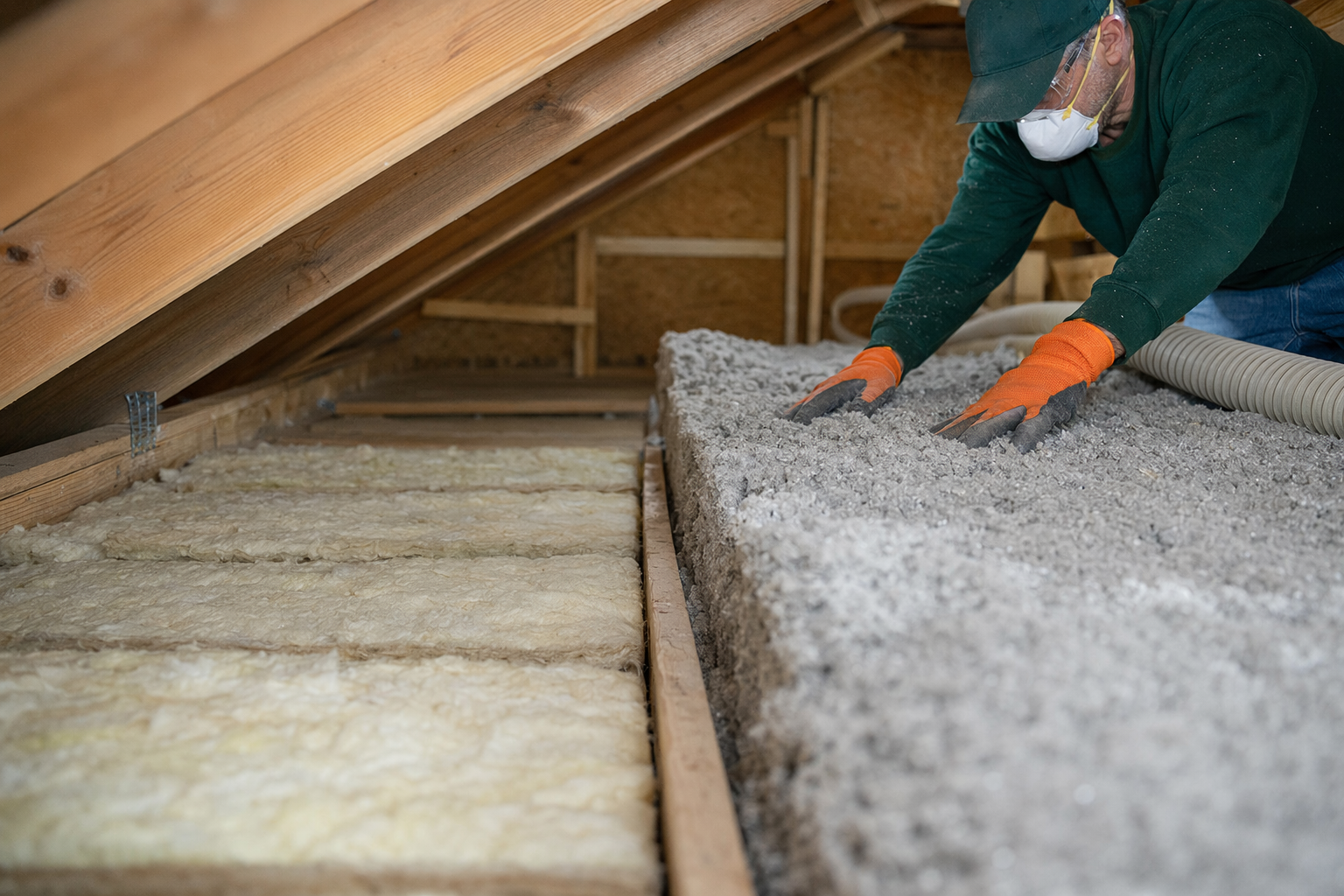
Common choices include blown-in cellulose, blown-in fiberglass, and fiberglass batts. These are often used when a homeowner wants to improve attic insulation without a full rebuild. Before adding insulation, many installers also recommend sealing common air leaks around top plates, wiring holes, duct penetrations, and attic hatches. You can read more about that in how to vet an insulation installer.
A higher R-value attic can help, but the goal is usually to reach the recommended range, not simply to add as much as possible. Past that point, the extra benefit may shrink while cost goes up.
If your attic has signs of moisture, mold-like staining, roof leaks, or ventilation concerns, ask licensed and insured installers to explain the scope in writing and follow local code and permit rules.
Walls, crawlspaces, and tricky areas may need a different material
Walls in hot and humid climates can be harder to upgrade than attics because access is limited. In existing walls, dense-packed blown-in insulation may be used when cavities are empty or under-insulated. In some cases, spray foam is chosen for areas where both insulation and air sealing are important.
Crawlspaces, basements, rim joists, and bonus rooms over garages may also need more than one solution. Moisture control matters a lot in these spaces. The best product for a dry attic may not be the best product for a damp crawlspace.
This is why homeowners should compare scope, not just price. A lower estimate may leave out air sealing, old insulation removal, or the final R-value the job is supposed to reach. If you want help connecting with local pros, you can start at get matched.
Spray foam can help, but it is not always the default best choice
Spray foam can be useful in hot and humid climates because it can both insulate and reduce air leakage. That can be helpful around rooflines, rim joists, and irregular spaces. But it is usually more expensive than blown-in or batt insulation, and it is not automatically the best answer for every house.
The right choice depends on:
- The area being insulated
- The R-value target
- The material used
- The home's age and access
- Whether old insulation must be removed
- Your region and local code requirements
Ask each licensed and insured installer to explain why they recommend one material over another for your specific home. Get the price, the work included, and the expected final R-value in writing before paying a deposit.
What to do next
Start by deciding which area is causing the biggest problem: attic heat, hot upstairs rooms, damp crawlspace air, or drafty walls. Then compare options for that part of the home instead of trying to solve everything at once.
A good next step is to speak with licensed and insured insulation installers, verify their license and insurance yourself, and ask for written estimates that clearly list the material, coverage area, air-sealing work, and final R-value. Thermline is a free matching service that helps homeowners connect with local installers for projects like attic, wall, crawlspace, blown-in, batt, spray foam, and air sealing. You can also review typical pricing on costs before you compare bids.
Hot and humid homes need insulation that slows heat and works with good moisture control. The best choice depends on where the insulation goes and whether air leaks are fixed too.