Best Insulation for Cold Climates
Cold climates need insulation that slows heat loss, handles air leaks well, and fits the part of the house you are insulating. The best choice is often **not one material for the whole home**, but a smart mix of attic, wall, basement or crawlspace insulation, plus air sealing.
Why this matters in a cold climate
In a cold climate, heat naturally moves from the warm inside of your home to the colder outside. Good insulation helps slow that heat loss. That can make rooms feel more even, reduce drafts, and help your heating system work less.
But insulation is only part of the job. Air leaks around attic openings, rim joists, wiring holes, and other gaps can let warm air escape fast. In many homes, the best results come from combining insulation with air sealing. You can learn more about project pricing on costs.
The short answer
For many cold-climate homes, the best insulation plan is: air-seal first, then add the right insulation for each area. Blown-in insulation is a common choice for attics. Fiberglass batts or blown-in material can work in open wall or floor cavities. Spray foam is often used for hard-to-seal areas like rim joists or tricky spaces. The right option depends on your climate zone, the R-value target, the material, access, moisture conditions, and your budget. R-value means how well insulation resists heat flow — higher numbers resist heat better, but more is not always better once you reach the recommended range for your climate.

Best options by area of the home
Attics
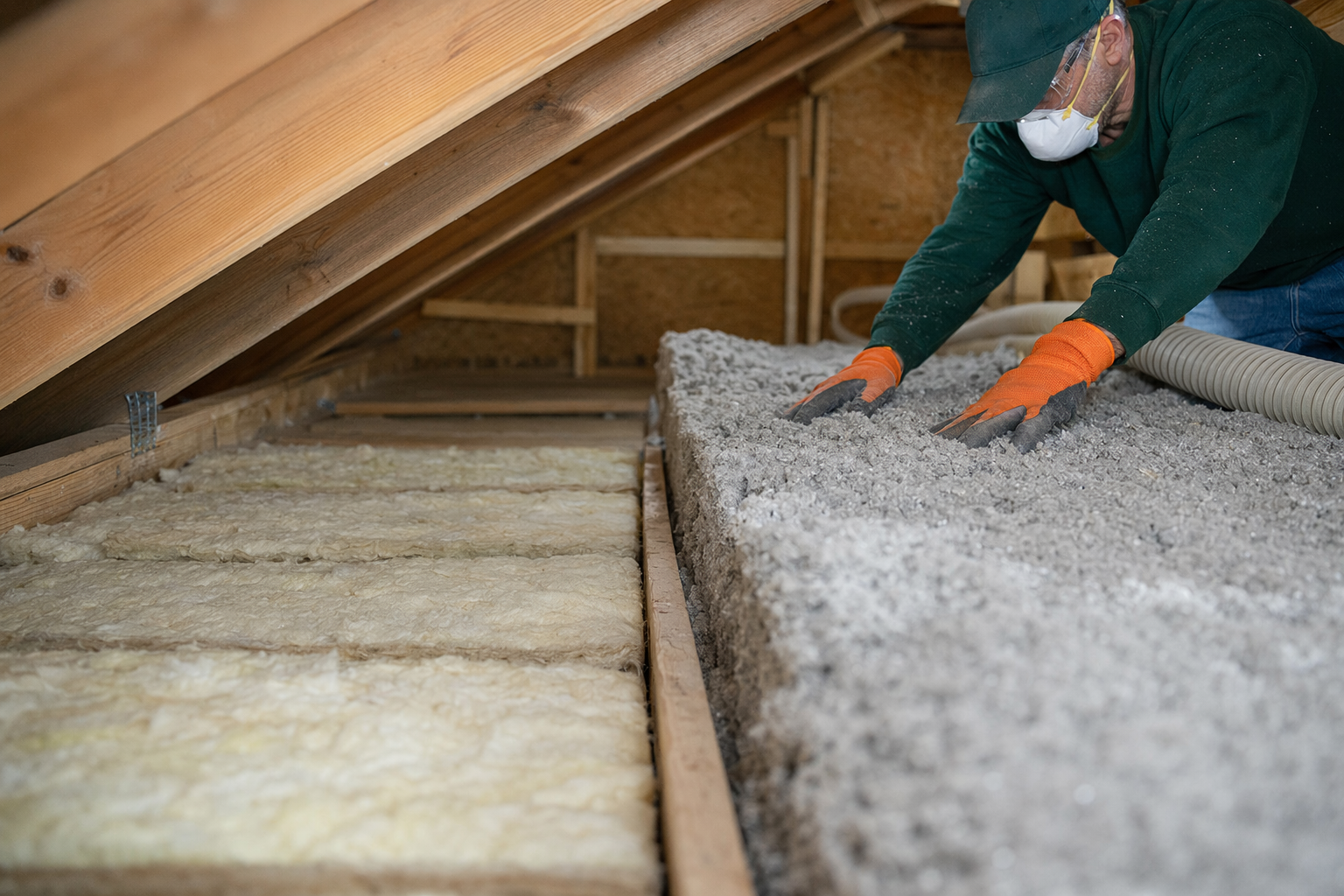
In many cold regions, the attic is the first place to improve. Warm air rises, so attic heat loss can be significant. Blown-in fiberglass or blown-in cellulose are common choices because they can cover large attic floors and fill around framing better than some batt-only layouts. Before adding insulation, many homeowners also benefit from attic air sealing around penetrations and access points.
Walls
If walls are open during renovation, batts or spray foam may be options. In existing closed walls, dense-packed blown-in material is often considered because it can be added with less disruption than fully opening the wall. The best wall insulation depends on wall depth, existing insulation, and moisture conditions.
Basements, crawlspaces, and rim joists
These areas matter a lot in cold weather because they can create cold floors and drafts. Rigid-style approaches or spray foam are often discussed for basement walls and rim joists because they can help with both insulation and air leakage control in the right situation. Crawlspaces may need a different approach depending on whether they are vented, unvented, dry, or damp.
What makes one insulation type better than another
There is no single best product for every cold-climate house. A better question is: best for which area, and for what problem?
Here are the main things to compare:
- Air sealing ability: Some materials mainly insulate, while others can also help reduce air leakage.
- R-value per inch: This matters when space is limited.
- Moisture behavior: Cold climates can have condensation risks, so the assembly has to be planned carefully.
- Installation access: Open framing is different from finished walls or tight attic edges.
- Budget: Typical insulation costs are estimates only, not quotes. Real price depends on the area insulated, the R-value target, material choice, the home's age and access, whether old insulation must be removed, and your region.
In short, the best insulation for cold climates is usually the one that reaches the right R-value for your zone, is installed correctly, and is paired with proper air sealing where needed. For help understanding contractors and scope, see how to vet an insulation installer.
What to do next
- Identify the area that feels worst: attic, walls, floors, basement, crawlspace, or a specific room.
- Ask installers what R-value the job will reach, not just what material they use.
- Get the full scope in writing before any deposit, including whether air sealing, removal of old insulation, and cleanup are included.
- Hire licensed and insured insulation installers, and verify the license and insurance yourself.
- Follow local permit and code rules.
Thermline is a free matching service that helps homeowners compare licensed, insured insulation installers near them. If you want to compare options, you can get matched.
Cold places need insulation that keeps heat inside and helps stop drafts. The best choice is often a combination of air sealing and the right insulation for each part of the home.